
Best NICU Hospital in Patna: What Parents Should Know About Newborn Care
The arrival of a newborn is a special moment for every family[cite: 12]. Most babies need routine care after birth, but some require closer observation, medical treatment or breathing and feeding support[cite: 12]. This may happen when a baby is born prematurely, has a low birth weight or develops a medical concern before or shortly after delivery[cite: 12].
A Neonatal Intensive Care Unit (NICU) is a specialised hospital unit that provides medical care for newborn babies who need additional support[cite: 12]. If you are searching for the best NICU hospital in Patna, understanding the services, clinical team and facilities available can help you ask informed questions and prepare for your baby's care[cite: 12].
The right level of care depends on each baby's condition[cite: 12]. This guide explains when NICU care may be needed, what happens inside a NICU and what parents should consider when choosing a hospital[cite: 12].
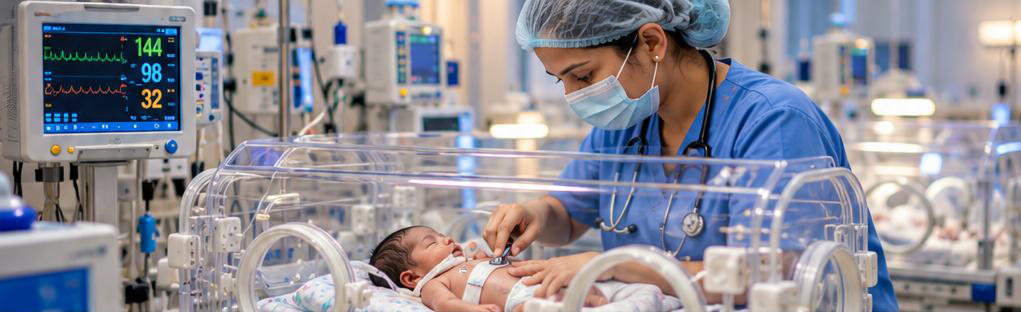
What Is a NICU?
NICU stands for Neonatal Intensive Care Unit[cite: 12]. It is a specialised area of a hospital where newborns who need extra medical attention are monitored and treated by a trained neonatal care team[cite: 12, 13]. Depending on the baby's needs, care may involve an incubator, monitoring equipment, breathing support, specialised feeding or medicines[cite: 13].
Not every baby admitted to a NICU is critically ill[cite: 13]. Some babies need observation or temporary support while they learn to breathe, feed or maintain their body temperature independently[cite: 13].
Why Might a Newborn Need NICU Care?
A doctor may recommend NICU admission when a newborn needs monitoring or treatment that cannot be provided safely in a routine postnatal setting[cite: 13]. Possible reasons include:
- Premature birth, particularly when the baby's organs need additional time and support to mature[cite: 13]
- Low birth weight or difficulty gaining weight[cite: 13]
- Breathing difficulties or problems maintaining oxygen levels[cite: 13]
- Difficulty maintaining body temperature[cite: 13]
- Feeding difficulties or low blood sugar[cite: 13]
- Suspected or confirmed infection[cite: 13]
- Jaundice that requires closer assessment or treatment[cite: 13]
- Complications around birth or another condition requiring specialised observation[cite: 13]
The decision to admit a baby and the type of treatment required are made by the treating neonatal team after assessing the newborn[cite: 13].
Premature Baby Care
A baby born before 37 completed weeks of pregnancy is considered premature[cite: 13]. Depending on how early the baby is born and their overall health, they may need help with breathing, feeding, temperature control or monitoring[cite: 13].
NICU care for a premature baby may include support with breast milk or other prescribed feeding methods, monitoring of vital signs, temperature support and assessment of growth[cite: 13]. The care plan is reviewed as the baby develops and becomes more stable[cite: 13].
Low Birth Weight and Newborn Health
Babies with low birth weight may need additional attention because they can have difficulty maintaining body temperature, feeding effectively or gaining weight[cite: 13]. The medical team may monitor feeding, blood glucose, temperature and weight, and assess for other concerns based on the baby's condition[cite: 13].
Parents should ask the treating team what milestones their baby needs to meet before discharge and what follow-up will be required at home[cite: 13].
Breathing Difficulties in Newborns
Some newborns experience breathing difficulties after birth[cite: 13]. Causes can vary and may include prematurity, infection or conditions affecting the lungs[cite: 13]. Depending on the diagnosis, treatment may involve oxygen, non-invasive breathing support or mechanical ventilation[cite: 13, 14].
Breathing support is selected and adjusted by the neonatal team according to the baby's clinical condition[cite: 14]. Parents should ask the doctor to explain the purpose of any equipment being used[cite: 14].
What Happens Inside a NICU?
A NICU provides close observation and specialised treatment[cite: 14]. Depending on the baby's needs, the team may monitor:
- Heart rate, breathing and oxygen saturation[cite: 14]
- Body temperature[cite: 14]
- Feeding, fluid intake and blood glucose[cite: 14]
- Weight gain and growth[cite: 14]
- Signs of infection or other complications[cite: 14]
Equipment may include incubators or warmers, cardiorespiratory monitors, feeding support devices and breathing-support equipment[cite: 14]. Not every baby needs every type of equipment or treatment[cite: 14].
How Can Parents Be Involved in NICU Care?
Parents remain an important part of their baby's care[cite: 14]. The NICU team can explain how and when parents may participate, depending on the baby's medical stability and hospital infection-control policies[cite: 14].
- Ask the neonatal team for regular updates and explanations of the care plan[cite: 14].
- Discuss expressing and providing breast milk if direct breastfeeding is not yet possible[cite: 14].
- Ask whether skin-to-skin contact or kangaroo mother care is appropriate for your baby[cite: 14].
- Follow hand hygiene, visiting and infection-prevention instructions[cite: 14].
- Understand the feeding plan, medicines if prescribed and follow-up schedule before discharge[cite: 14].
If you feel worried or unsure, ask the care team to explain your baby's progress in clear language[cite: 14].
How to Choose the Right NICU Hospital in Patna
When comparing hospitals, parents can ask practical questions about the neonatal team, facilities and how care is organised[cite: 14]. Consider:
- Whether qualified neonatology or paediatric specialists are involved in newborn care[cite: 14]
- What levels of neonatal support and monitoring are available[cite: 14]
- Whether respiratory support and specialised feeding support can be provided when required[cite: 14]
- How emergencies are assessed and managed[cite: 14]
- What infection-prevention and hygiene practices are followed[cite: 14]
- How parents receive updates and participate in care[cite: 14]
- What discharge planning and follow-up services are arranged[cite: 14]
The most appropriate NICU depends on the baby's specific medical needs[cite: 14]. If a newborn requires a level of care that is not available at a particular facility, the treating doctor may recommend transfer to a centre with the required services[cite: 14, 15].
NICU and Neonatal Care at Jyoti Punj Hospital, Patna
Jyoti Punj Hospital is a Women & Children Specialty Hospital in Patna[cite: 15]. The hospital lists neonatal care and a 24x7 NICU among its facilities, supporting care for newborns who need additional observation or specialised medical attention[cite: 15].
If your baby is premature, has a low birth weight or has been advised to undergo neonatal assessment, contact the hospital to enquire about the available neonatal services and the appropriate next step[cite: 15]. The neonatal team can assess the baby's condition and explain which facilities or treatment options may be suitable[cite: 15].
Every newborn is different[cite: 15]. The type and duration of NICU care depend on the baby's gestational age, medical condition and progress[cite: 15]. Parents should discuss the individual care plan directly with the treating neonatologist or paediatrician[cite: 15].
When Should Parents Seek Immediate Medical Help After Discharge?
After a newborn goes home, seek urgent medical advice if the baby has difficulty breathing, turns blue or unusually pale, is difficult to wake, feeds poorly, develops a fever or unusually low temperature, has markedly fewer wet nappies, or appears seriously unwell[cite: 15]. For severe breathing difficulty, unresponsiveness or another emergency, seek emergency medical care immediately[cite: 15].
Book a Neonatal Care Consultation at Jyoti Punj Hospital
If you are looking for NICU or newborn care in Patna, contact Jyoti Punj Hospital to enquire about neonatal services and consultation availability[cite: 15]. If your baby has already been assessed elsewhere, keep the discharge summary, investigation reports and current treatment details ready when speaking with the medical team[cite: 15].
Book an Appointment: Call the hospital team to enquire about neonatal consultation and available services[cite: 15].
Phone: 0612-2540752 | 7544033999 | 9939626999[cite: 15]
For an emergency involving a newborn, seek immediate medical attention rather than waiting for a routine appointment[cite: 15].
Frequently Asked Questions
When does a newborn need NICU care?
A newborn may need NICU care if they are premature, have low birth weight, breathing or feeding difficulties, an infection or another condition requiring close monitoring or specialised treatment[cite: 15].
Does every premature baby need NICU admission?
Not necessarily[cite: 15]. The need for NICU care depends on the baby's gestational age, health, ability to breathe and feed, temperature stability and the treating doctor's assessment[cite: 15, 16].
How long does a baby stay in the NICU?
There is no fixed duration[cite: 16]. The stay depends on the baby's condition and progress, including breathing, feeding, temperature control, growth and overall clinical stability[cite: 16].
Can parents visit or participate in NICU care?
This depends on the baby's condition and the hospital's visiting and infection-control policies[cite: 16]. Parents should ask the neonatal team how they can safely participate[cite: 16].
Can a baby breastfeed while in the NICU?
Some babies can breastfeed directly, while others may need expressed breast milk or another feeding method temporarily[cite: 16]. The neonatal team can guide parents according to the baby's development and medical needs[cite: 16].
What should parents ask before NICU discharge?
Ask about feeding, medicines if prescribed, warning signs, follow-up appointments, immunisations, growth monitoring and whom to contact if the baby becomes unwell[cite: 16].