Premature Baby Care in Patna: When Does a Newborn Need Specialised Treatment?
The birth of a baby is a special moment for every family. When a baby arrives earlier than expected, parents may have questions about feeding, breathing, growth and the medical support their newborn may need. Some premature babies need only observation, while others require specialised care and close monitoring.
A premature baby, also called a preterm baby, is born before 37 completed weeks of pregnancy. Because some organs may still be developing, these babies can face challenges with breathing, maintaining body temperature, feeding and fighting infections. The level of care depends on how early the baby is born and their individual health.
If you are looking for premature baby care in Patna, understanding the possible needs of a preterm newborn can help you have informed discussions with your obstetrician, neonatologist and paediatric care team.
What Is a Premature Baby?
A baby born before 37 completed weeks of pregnancy is considered premature. Prematurity is commonly grouped by gestational age: extremely preterm (before 28 weeks), very preterm (28 to less than 32 weeks),
and moderate to late preterm (32 to less than 37 weeks). These categories help clinicians describe gestational age, but every baby needs an individual assessment.
Some premature babies may need a Neonatal Intensive Care Unit (NICU), while others may be able to stay with their mother with appropriate observation. The treating team decides based on breathing, temperature, feeding, weight and overall condition.
Why Are Some Babies Born Prematurely?
Premature birth can happen for different reasons, and sometimes no single cause is identified. Factors associated with preterm birth may include:
- Certain maternal health conditions, such as high blood pressure, diabetes or infections •Pregnancy with twins or more than one baby •Problems involving the placenta, cervix or uterus •A history of a previous preterm birth •Pregnancy complications where early delivery is considered safer for the mother or baby
Having a risk factor does not mean premature birth will definitely occur. Regular antenatal care helps identify concerns and allows the care team to discuss monitoring and treatment options.
Common Health Challenges in Premature Babies
The earlier a baby is born, the more likely they may need extra support. Possible challenges include:
- Breathing difficulties because the lungs may not be fully developed •Difficulty maintaining body temperature •Feeding problems due to immature sucking and swallowing coordination •Low blood sugar or difficulty maintaining stable glucose levels •Jaundice that may require assessment or treatment •Increased risk of infection •Need for additional monitoring of weight gain and development
Not every premature baby experiences all these problems. The neonatal team monitors the baby and tailors care to the needs that are present.
When Does a Premature Baby Need NICU Care?
A neonatologist or paediatrician may recommend NICU admission when a premature baby needs specialised monitoring or treatment. This may include support for breathing, maintaining body temperature, feeding, blood glucose management or treatment of an infection.
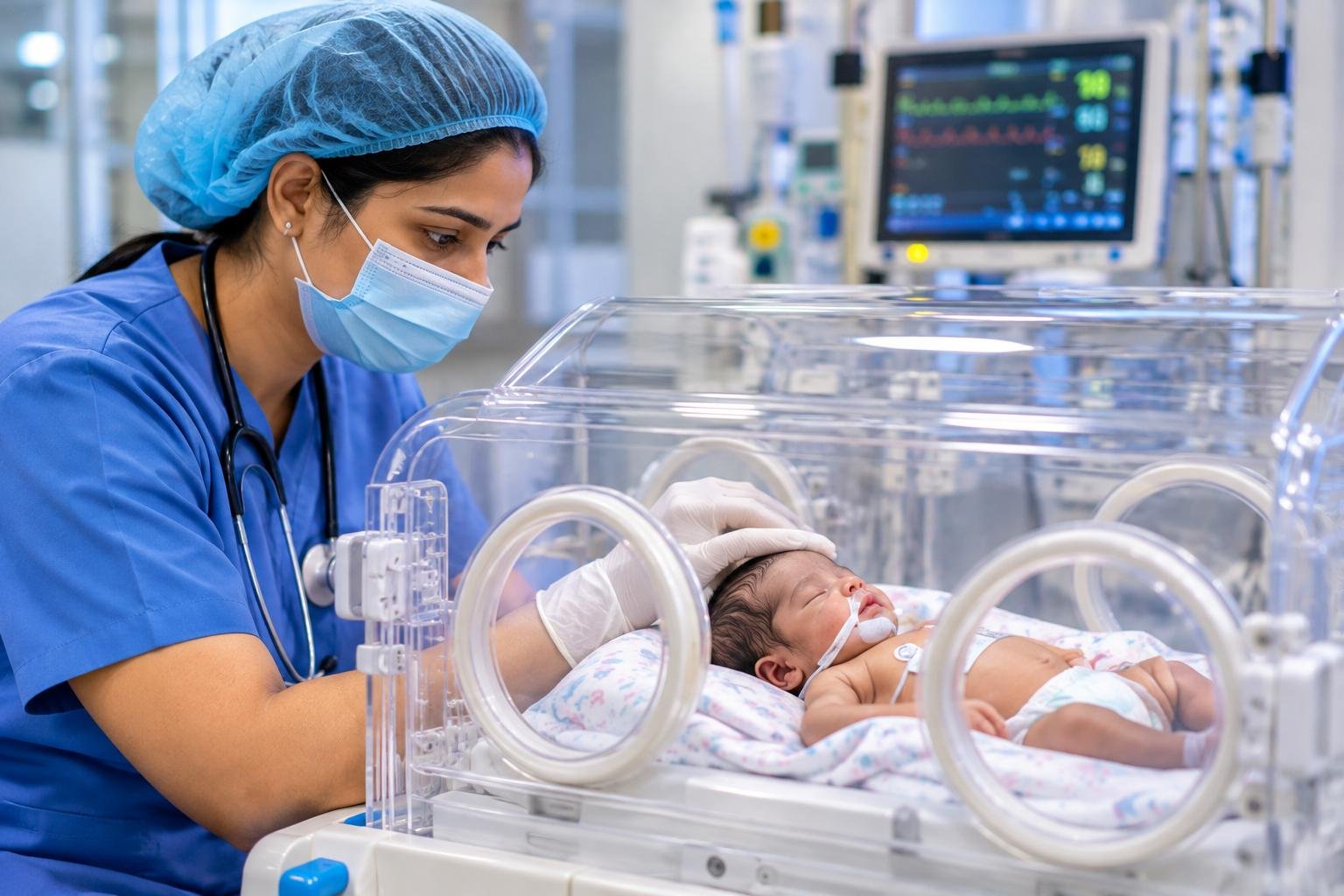
NICU care may involve an incubator or warmer, monitors for heart rate and oxygen levels, prescribed feeding support, oxygen or other respiratory support when clinically required. The equipment and treatment used depend on the baby’s condition. Parents can ask the team to explain each monitor or treatment.
Special Feeding and Nutrition for Preterm Babies
Nutrition is an important part of premature baby care. Breast milk is generally encouraged for premature babies because it provides nutrients and immune protection. Depending on the baby’s maturity and medical condition, feeding may happen directly at the breast, through expressed breast milk, or through a feeding tube for a period of time.
Some premature babies may need additional fortification or a specific feeding plan to support growth. Parents should follow the advice of the neonatologist and neonatal nutrition team, and should not change feeding amounts or add supplements without medical guidance.
Kangaroo Mother Care (KMC)
Kangaroo Mother Care involves skin-to-skin contact between the baby and a parent or caregiver, along with support for breast-milk feeding and appropriate follow-up. When the baby is clinically stable and the care team considers it suitable, KMC can help support warmth, breastfeeding, bonding and weight gain.
Ask the neonatal team when and how KMC can be started safely. Very small or medically unstable babies may need special arrangements and monitoring while receiving skin-to-skin care.
Premature Baby Care After Hospital Discharge
Discharge from the NICU is an important milestone, but premature babies may need continued follow-up after going home. The care team will explain the baby’s feeding plan, medicines if prescribed, temperature and hygiene guidance, and follow-up schedule.
- Attend recommended follow-up appointments and growth assessments. •Follow the feeding plan and discuss feeding difficulty or poor weight gain. •Keep immunisations on schedule as advised by the paediatrician. •Practise hand hygiene and reduce exposure to people who are unwell. •Learn the warning signs that require urgent medical attention. •Ask about developmental screening and any recommended early-intervention support.
Seek urgent medical advice if the baby has difficulty breathing, turns blue or unusually pale, is difficult to wake, has a fever or unusually low temperature, feeds poorly, has markedly fewer wet nappies or appears seriously unwell.
When Should Parents Consult a Neonatologist?
Parents should discuss a newborn’s care with a neonatologist or paediatrician if the baby is born before 37 weeks, has low birth weight, has breathing or feeding difficulties, needs NICU admission, or requires follow-up after discharge. A specialist can assess the baby’s condition, explain the care plan and guide parents on feeding, growth and monitoring.
If an expectant mother has signs of possible preterm labour—such as regular contractions, fluid leakage, vaginal bleeding or pelvic pressure—she should contact her maternity care team promptly or seek urgent assessment.
Premature Baby Care at Jyoti Punj Hospital, Patna
Jyoti Punj Hospital is a Women & Children Specialty Hospital in Patna. The hospital provides neonatal and newborn care, including NICU facilities for babies who need additional monitoring and medical support. Parents can contact the hospital to enquire about available neonatal services and consultation arrangements.
For a premature or high-risk newborn, the appropriate care plan depends on gestational age, birth weight, clinical condition and progress. The treating neonatal team can assess the baby and explain the support and follow-up that may be required.
If your baby has been referred from another facility, keep the birth details, discharge summary, investigation reports and current medication or feeding information ready for the consultation.
Book a Consultation for Premature Baby Care
For information about neonatal consultation and premature newborn care at Jyoti Punj Hospital, Patna, contact the hospital team:
Phone: 0612-2540752 | 7544033999 | 9939626999
For urgent symptoms or an emergency involving a newborn, seek immediate medical attention rather than waiting for a routine appointment.
Frequently Asked Questions
How early is considered a premature birth?
A baby born before 37 completed weeks of pregnancy is considered premature.
Does every premature baby need NICU admission?
No. The need for NICU care depends on gestational age, breathing, feeding, temperature stability and the baby’s overall clinical condition.
How long does a premature baby stay in the NICU?
There is no fixed duration. It depends on the baby’s health, progress, ability to feed, maintain temperature and breathe safely.
Is breastfeeding possible for a premature baby?
Yes, many premature babies can receive breast milk. Some may initially need expressed milk or tube feeding until they can coordinate sucking, swallowing and breathing.
What is Kangaroo Mother Care?
KMC is a care method that includes skin-to-skin contact, breast-milk feeding support and follow-up, when clinically appropriate.
What care is needed after NICU discharge?
Follow the individual feeding and medicine plan, attend growth and developmental follow-ups, maintain hygiene and follow the paediatrician’s immunisation advice.
Can premature babies grow and develop normally?
Many premature babies make good progress, although some may need additional monitoring or developmental support. Outcomes vary and should be discussed with the child’s doctor.